How to Remove Pet Hair from Stairs Without Damaging the Banister: Safe, Step‑by‑Step Methods
Introduction
Pet owners frequently encounter stubborn hair on stair treads and banisters, especially after a vigorous play session. Removing that hair without scratching wood or damaging finishes can be challenging, yet it is essential for maintaining a clean and presentable home. This guide teaches readers how to eliminate pet hair safely, efficiently, and without compromising the integrity of banister materials. By following the outlined steps, one will achieve a hair‑free staircase while preserving the aesthetic appeal of railings and woodwork.
The methods described combine low‑cost household techniques with three highly rated Amazon tools that enhance performance. Even if a reader chooses not to purchase these tools, the underlying principles remain applicable. The guide also offers troubleshooting advice for common obstacles such as static cling or deep‑embedded fur.
Readers will learn how to select appropriate tools, prepare the area, execute targeted cleaning actions, and verify that no residue remains. The result is a staircase that looks immaculate and a banister that retains its original finish.
What You’ll Need
- Scotch‑Brite Extra Sticky Lint Roller – 95 adhesive sheets, $5.98, 4.6/5 rating.
- BLACK+DECKER Pet Hair Roller – reusable roller, $15.88, 4.6/5 rating.
- ChomChom Roller – eco‑friendly reusable roller, $24.99, 4.5/5 rating.
- Microfiber cleaning cloths, a soft‑bristle brush, a small vacuum with brush attachment, and a gentle wood‑safe polish.
Step‑by‑Step Instructions
Step 1: Gather and Inspect Your Tools
Before beginning, lay out each cleaning tool on a stable surface and verify that the banister material is compatible with the recommended products. For wooden or lacquered railings, avoid abrasive pads that could strip finish. The Scotch‑Brite Extra Sticky Lint Roller offers a gentle adhesive surface that lifts hair without pulling at fibers, making it ideal for delicate wood. Its 50% increased stickiness compared with standard rollers ensures efficient hair capture while the easy‑tear sheets prevent residue buildup.
The BLACK+DECKER Pet Hair Roller uses static electricity rather than adhesive, which is advantageous for banister railings that may be sensitive to glue. Its transparent window signals when the collection bin is full, reducing the risk of over‑loading the device.
Finally, the ChomChom Roller provides a reusable, non‑sticky alternative that works well on broader stair treads. Its built‑in receptacle stores captured hair until emptied, eliminating waste from disposable sheets.
Confirm that each roller is clean and that the lint roller sheets are intact. A clean tool ensures maximum efficiency and prevents transferring old hair back onto the stairs.
Step 2: Prepare the Staircase and Banister
Begin by removing loose debris with a soft‑bristle brush or a handheld vacuum set to low suction. Sweep the treads and banister to dislodge large clumps that could jam a roller. For wood banisters, use a dry microfiber cloth to capture dust without scratching the surface. This preparation step reduces static cling and allows the rollers to focus on fine hair rather than bulk particles.
If the banister has a glossy finish, lightly mist the area with a wood‑safe polish diluted with water. The slight moisture helps hair adhere to the adhesive surface of the lint roller without damaging the finish. Allow the surface to dry for one minute before proceeding.
Position a small bucket or trash bag at the base of the stairs to collect used sheets or empty roller bins. This keeps the workspace tidy and prevents hair from scattering back onto cleaned areas.
Take a moment to inspect the banister for cracks or loose joints. Repairing these issues before cleaning prevents hair from becoming trapped in gaps and ensures a smoother cleaning process.
Step 3: Remove Hair from Stair Treads Using the Lint Roller
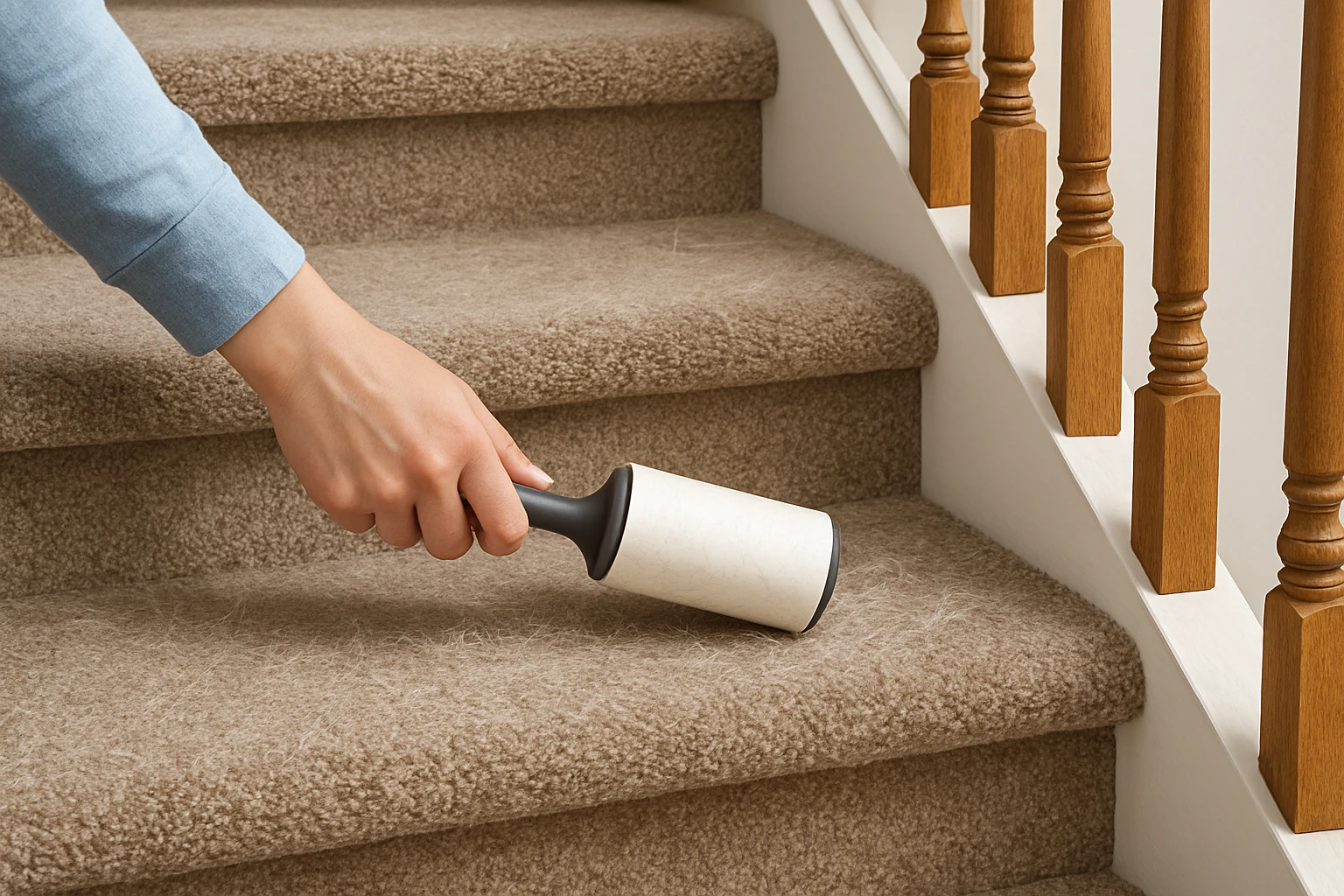
Starting at the bottom tread, roll the Scotch‑Brite Extra Sticky Lint Roller along the grain of the wood. Apply gentle pressure and use short, overlapping strokes to maximize contact. The extra‑sticky adhesive captures fine strands that a vacuum may miss, especially on textured carpeted treads.
After each few strokes, tear off the used sheet to expose a fresh adhesive surface. The product includes 100 easy‑tear sheets, ensuring that performance does not degrade over the course of the cleaning session. Continue this process up the staircase, working methodically to avoid missing any section.
For carpeted stairs, press the roller more firmly to allow the adhesive to penetrate the pile. The result is a carpet that looks freshly vacuumed without the need for a heavy machine.
When the last sheet is used, dispose of it in the prepared bucket. The lint roller’s handle is ergonomically designed, reducing hand fatigue during extended use.
Step 4: Clean the Banister with the Reusable Pet Hair Roller
Next, address the banister itself. Hold the BLACK+DECKER Pet Hair Roller with the rubber over‑molded grip for comfort. Move the roller back and forth along the rail, allowing the static‑charged pads to attract hair. Because this roller does not rely on adhesive, it will not leave any residue on polished wood.
The transparent window on the roller indicates when the collection bin is nearing capacity. Once the window darkens, press the latch button to open the bin and empty the accumulated hair into the bucket. This design prevents over‑filling, which could reduce suction efficiency.
For intricate rail designs, rotate the roller to reach corners and decorative elements. The short push‑pull motion ensures that hair is lifted from crevices without scratching the surface.
After the banister is cleared, give it a final wipe with a dry microfiber cloth to remove any remaining static particles.
Step 5: Finish with the Wide‑Area ChomChom Roller
For the broader stair surfaces, especially if they are carpeted or have a fabric runner, employ the ChomChom Roller. Its 7.5‑inch width covers more area per pass, reducing the number of strokes required. Roll back and forth with moderate pressure; the built‑in squeegee collects hair into the internal chamber.
When the chamber fills, press the release button to open the collection door and empty the hair. The roller’s reusable nature eliminates the need for disposable sheets, making it an eco‑friendly choice for frequent cleaning.
If the banister includes fabric upholstery, the ChomChom’s extra‑sticky capability (without adhesive) lifts hair effectively while preserving fabric integrity. This versatility makes it a valuable addition to any pet‑owner’s cleaning arsenal.
Conclude the cleaning session by inspecting each step and the banister for missed spots. A quick visual check ensures that no hair remains hidden in corners or under decorative trim.
Tips & Pro Tips
- Work from the bottom of the staircase upward to prevent re‑depositing hair onto already cleaned steps.
- Use a light mist of water on extremely static surfaces; this reduces static cling and improves adhesive performance.
- For wooden banisters, avoid abrasive scrubbers. A soft microfiber cloth followed by a lint roller is sufficient.
- Keep a spare roll of Scotch‑Brite Extra Sticky Lint Roller sheets in a drawer for quick touch‑ups after each pet grooming session.
- Schedule a weekly deep‑clean using the BLACK+DECKER Pet Hair Roller to prevent buildup that can become embedded in wood grain.
- When using the ChomChom Roller, empty the collection chamber before it becomes too full; an overloaded chamber reduces pickup efficiency.
Troubleshooting
Problem: Lint roller loses stickiness after several sheets.
Solution: Replace the used sheet with a fresh one from the pack. If stickiness diminishes across multiple sheets, store the roller in a cool, dry place to preserve adhesive quality.
Problem: Reusable roller fails to pick up hair on smooth metal banisters.
Solution: Lightly dampen the banister with a cloth; a small amount of moisture improves static attraction. Alternatively, switch to the adhesive lint roller for smooth surfaces.
Problem: ChomChom Roller leaves hair trapped in the side hinges.
Solution: Empty the chamber more frequently and use a small brush to clear hinge crevices before each use.
Conclusion
By following the structured approach outlined above, one can remove pet hair from stairs and banisters without compromising the finish of wood or fabric surfaces. The combination of a high‑adhesion lint roller, a static‑based reusable roller, and a wide‑area eco‑friendly roller provides a comprehensive toolkit for any pet‑friendly household. Regular maintenance using these methods will keep staircases looking pristine and reduce the time spent on deep cleaning sessions.
Readers are encouraged to adapt the steps to their specific staircase materials and to experiment with the recommended tools to discover the most efficient workflow for their home.
Products Mentioned in This Guide
Scotch‑Brite Extra Sticky Lint Roller
Price: $5.98 | Rating: 4.6/5 (19,802 reviews)
- 50% stickier adhesive for superior pet hair pickup
- 95 easy‑tear sheets provide long‑lasting use
- Ergonomic handle for comfortable grip
- Versatile for clothes, upholstery, car seats, and more
BLACK+DECKER Pet Hair Roller
Price: $15.88 | Rating: 4.6/5 (3,425 reviews)
- Reusable, no‑sticky‑tape design
- Transparent window indicates when the bin is full
- Rubber over‑molded grip for comfort
- Effective on wood, metal, and fabric banisters
ChomChom Roller
Price: $24.99 | Rating: 4.5/5 (194,091 reviews)
- Reusable, eco‑friendly design without adhesive
- 7.5‑inch width covers large areas quickly
- Built‑in receptacle with release button for easy emptying
- Works on both dog and cat hair across various fabrics
Frequently Asked Questions
What is the safest way to remove pet hair from wooden stair treads without scratching the surface?
Use a microfiber cloth or a soft-bristled rubber brush to lift hair, then follow with a gentle vacuum on a low‑suction setting.
Can I use a lint roller on banisters made of metal or glass?
Yes, a lint roller works well on smooth metal or glass banisters and removes hair without abrasive contact.
How do I prevent static cling that makes pet hair stick to carpeted stairs?
Lightly mist the stairs with a water‑based anti‑static spray or rub a dryer sheet over the surface before cleaning.
Which Amazon‑rated tools are most effective for deep‑embedded fur on stair corners?
A cordless handheld vacuum with a motorized brush head and a silicone pet‑hair removal glove are top‑rated for reaching tight corners.
What is the best method to ensure no residue is left on the banister after cleaning?
Wipe the banister with a damp microfiber cloth and then dry it with a clean, dry microfiber towel to remove any leftover particles.