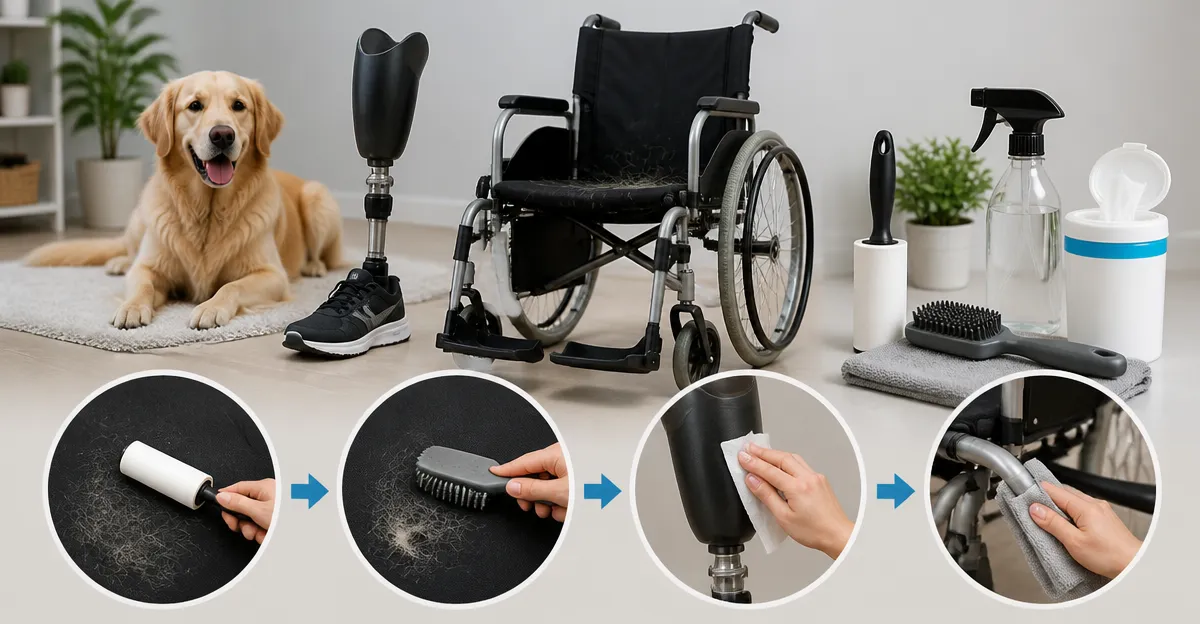
How to Remove Pet Hair from Prosthetics and Mobility Aids: Safe, Effective Methods and Prevention Tips
Introduction
Pet owners who rely on prosthetic limbs or mobility aids often discover that fur clings to their devices as readily as it does to clothing. This guide explains how to eliminate pet hair without damaging delicate components, while also providing strategies to prevent future buildup. Readers will learn a systematic approach, discover which tools perform best, and understand why each recommendation matters. By following these instructions, one can maintain both hygiene and the functional integrity of assistive equipment.
What You’ll Need
- A reusable lint roller designed for pet hair (e.g., ChomChom Roller)
- A compact, non‑sticky roller such as the Black+Decker Pet Hair Remover
- A manual carpet rake like the SOCCSO Pet Hair Carpet Rake
- Sticky lint sheets for quick touch‑ups, for example the Swihauk Sticky Lint Roller
- A lightweight, reusable scraper such as the Qbily Pet Hair Remover
- Microfiber cleaning cloths, mild soap, and a soft brush for delicate surfaces
Step‑by‑Step Instructions
1. Inspect the Device and Identify Sensitive Areas
Before any cleaning begins, examine the prosthetic or mobility aid for electronic ports, hinges, and fabric coverings. Note any areas that are waterproof versus those that require dry cleaning only. This inspection prevents accidental exposure of vulnerable components to moisture or abrasive tools. Document the locations of hair accumulation so that the subsequent steps can be targeted efficiently.
2. Remove Loose Hair with a Reusable Lint Roller
The first action should be to eliminate surface hair that is not embedded. The ChomChom Roller excels in this role because it uses a built‑in receptacle rather than adhesive sheets, eliminating waste and reducing the risk of residue on prosthetic surfaces. Its price of $24.99 and rating of 4.5/5 from over 200,000 reviews indicate strong performance and durability. Roll the device back and forth across fabric panels, seat cushions, and any textile‑covered joints. When the chamber fills, press the release button to empty the collected fur; no sticky tape is required, which protects electronic housings from adhesive contamination.
3. Target Embedded Hair with a Compact Roller
For hair that is tangled within the weave of upholstery, the Black+Decker Pet Hair Remover provides a superior solution. Priced at $15.88 with a 4.6/5 rating, this tool uses static electricity generated by a velvet‑like roller to lift hair into a transparent collection bin. The clear window allows the user to see when the bin is full, preventing over‑filling that could press hair into seams. Perform short, rapid push‑pull motions rather than long rolls; this motion maximizes static buildup and ensures hair is transferred to the bin rather than redistributed.
4. Scrape Stubborn Fur from Hard‑to‑Reach Spots
When hair is embedded in carpeted flooring or thick upholstery surrounding the prosthetic base, a manual carpet rake is most effective. The SOCCSO Pet Hair Carpet Rake offers two interchangeable heads: a copper scraper for heavy‑duty piles and a plastic shaver for delicate fabrics. At $8.99 and a 4.4/5 rating, it provides an economical yet robust option. Use the copper head on high‑pile carpet under the device, and the plastic head on upholstery to avoid fabric damage. The rake’s design lifts hair without pulling fibers, preserving the appearance of the aid.
5. Perform Quick Touch‑Ups with Sticky Lint Sheets
For immediate removal of stray hairs after a walk or grooming session, the Swihauk Sticky Lint Roller offers convenience. Each pack contains 600 sheets across six rollers, priced at $9.99 with a 4.6/5 rating. The extra‑sticky formula adheres to fine fur on clothing, armrests, and leather grips. The spiral‑tear design ensures each sheet separates cleanly, preventing accidental tearing that could leave adhesive residue on delicate surfaces. Apply the roller gently, rotating the handle to maintain even pressure.
6. Use a Manual Scraper for Precision Cleaning
For narrow crevices, such as the gap between a prosthetic socket and a fabric sleeve, the Qbily Pet Hair Remover 2nd Gen is ideal. It costs $7.99, carries a 4.5/5 rating, and includes three interchangeable heads that can scrape hair without electricity or adhesives. The rubber‑broom edge lifts hair while the metal head offers a firmer scrape for stubborn clumps. Because it is reusable, the tool aligns with eco‑friendly practices and eliminates the need for disposable refills.
7. Clean the Device Surface After Hair Removal
After all hair has been extracted, wipe the prosthetic or mobility aid with a lightly dampened microfiber cloth. Use a mild soap solution only if the manufacturer permits moisture on the surface; otherwise, a dry cloth is sufficient. Ensure that no lint roller debris remains, as residual fibers can attract additional hair. Allow the device to air dry completely before re‑assembly.
Tips & Pro Tips
- Perform a quick lint‑roller pass daily to prevent hair from embedding deeply.
- Store reusable rollers in a dry, dust‑free container to maintain adhesive performance.
- When using the Black+Decker roller, avoid applying excessive pressure; the static effect works best with light, consistent strokes.
- For prosthetic sockets made of silicone or gel, use only the Qbily scraper’s soft plastic head to avoid surface abrasion.
- Consider applying a fabric protector spray on textile covers after cleaning; this reduces static attraction of pet hair.
Troubleshooting
| Problem | Possible Cause | Solution |
|---|---|---|
| Roller does not pick up hair | Static charge depleted or roller surface dirty | Wipe the roller with a dry cloth; for the Black+Decker model, tap it lightly on a hard surface to restore static. |
| Hair reappears after cleaning | Hair trapped in seams or hinges | Use the Qbily metal head to gently pry hair from crevices, then re‑run the ChomChom Roller. |
| Adhesive residue on fabric | Sticky lint sheets left on surface | Remove residue with a small amount of rubbing alcohol on a cloth; test on an inconspicuous area first. |
Conclusion
Maintaining prosthetic limbs and mobility aids in a pet‑friendly household requires a disciplined cleaning routine and the right set of tools. By inspecting the device, removing loose hair with a reusable roller, targeting embedded fur with a static roller, scraping stubborn clumps with a carpet rake, and performing quick touch‑ups with sticky sheets, one can keep equipment clean and functional. The recommended products—ChomChom Roller, Black+Decker Pet Hair Remover, SOCCSO Carpet Rake, Swihauk Sticky Lint Roller, and Qbily Pet Hair Remover—offer specific advantages that streamline each step. Consistent maintenance not only prolongs the life of the assistive device but also enhances user comfort and confidence.
Products Mentioned in This Guide
Frequently Asked Questions
What is the safest way to remove pet hair from a prosthetic limb without damaging its components?
Use a reusable lint roller or a non‑sticky pet hair remover, gently rolling it over the surface to lift hair without applying pressure.
Can a carpet rake be used on mobility aids, and how?
Yes, a manual carpet rake can lift hair from textured areas; sweep lightly across the device’s surface to avoid scratching.
How often should I clean pet hair from my assistive devices?
Clean the device after each use or at least once daily to prevent buildup and maintain hygiene.
Are there any cleaning solutions that should be avoided on prosthetics?
Avoid liquid cleaners, solvents, or sprays that can seep into joints or electronics; stick to dry tools like rollers and rakes.
What preventive measures can reduce pet hair accumulation on mobility aids?
Store devices in a hair‑free area, use protective covers, and regularly brush your pet to minimize shedding near the equipment.