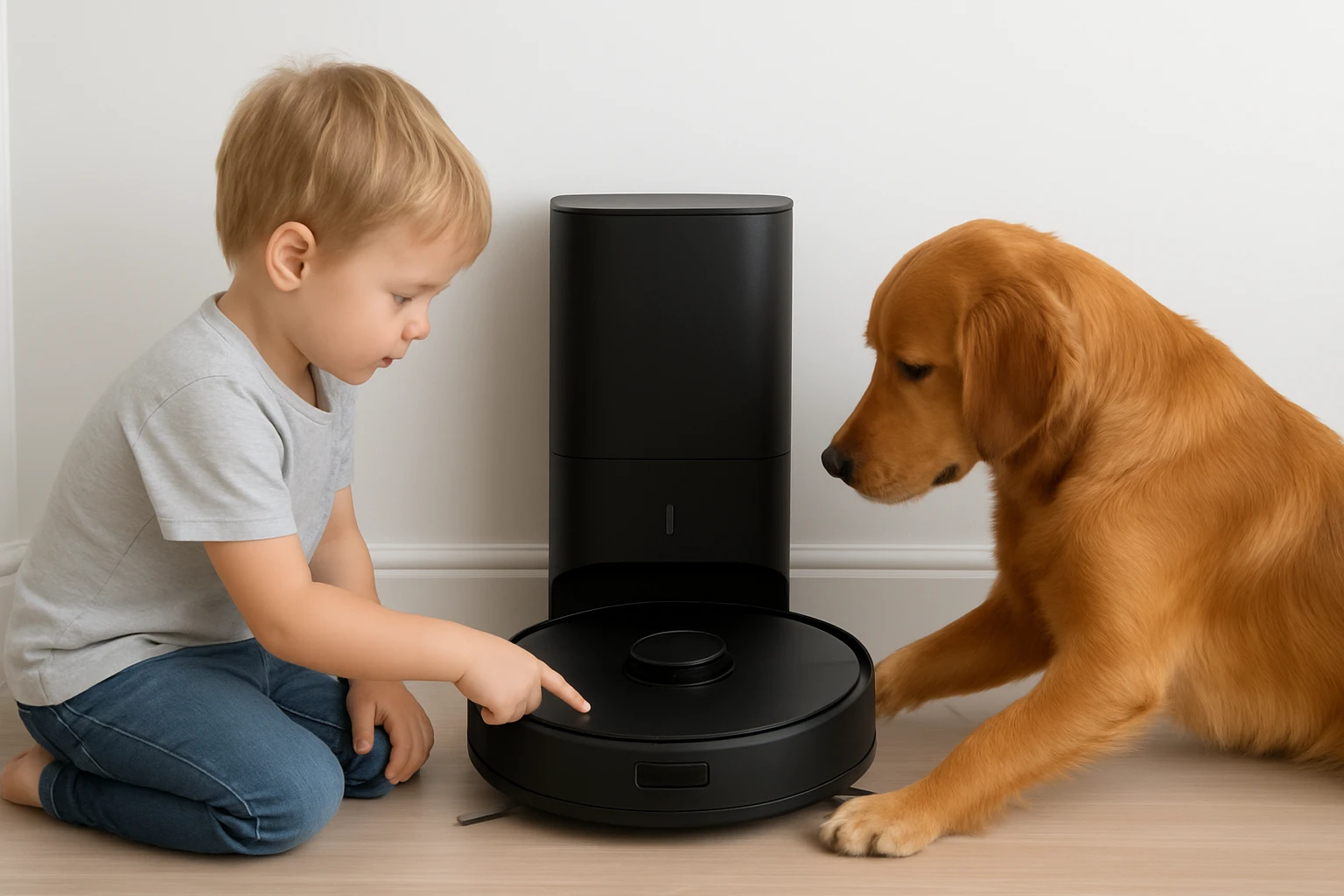

How to Child- and Pet-Proof Your Robot Vacuum Dock: Step‑by‑Step DIY Safety Guide
This guide explains how one can transform a standard robot vacuum charging station into a safe zone that protects both children and pets. The reader will learn practical measures, from selecting the right location to installing protective accessories, that reduce the risk of accidental contact or damage. By following each step, one can maintain cleaning efficiency while ensuring household safety. The information is presented in a professional tone suitable for an intermediate audience.
What You Will Need
- Non‑slip rubber mat (size appropriate for your dock)
- Cable management clips or sleeves
- Child‑proof gate or play‑pen panel
- Protective brush cover – NSFGHE Brush Cover
- Small screwdriver set (Phillips and flat‑head)
- Measuring tape and level
Step 1: Choose an Appropriate Dock Location
One should begin by selecting a location that is out of direct foot traffic and away from pet feeding areas. The ideal spot is a flat surface near a power outlet, allowing the dock to sit level and stable. Measuring the distance from the outlet ensures that the power cord will not need to be stretched, which could become a tripping hazard for children. Positioning the dock near a wall also reduces the chance that a curious cat will jump onto the charging base.
Step 2: Install a Non‑Slip Mat Under the Dock
A rubber mat provides friction that prevents the dock from sliding when a pet brushes against it. Lay the mat on the floor and use a level to verify that it is perfectly horizontal; an uneven surface can cause the robot to misalign when docking. Secure the mat edges with double‑sided tape if the flooring is particularly smooth, such as polished tile. This simple addition costs less than ten dollars and dramatically improves safety.
Step 3: Replace the Original Brush Cover with a Durable Replacement
The brush assembly of many robot vacuums, including the Tineco Floor One S3, is vulnerable to pet hair and child‑induced wear. Installing the NSFGHE Brush Cover protects the brush from debris while maintaining optimal cleaning performance. This brush cover is made of fine, hard‑wearing material, ensuring longevity even under frequent cleaning cycles. Priced at $31.34 with a perfect 5‑star rating, it offers a reliable solution for households that demand durability.
To install, first disconnect the robot from its dock and flip it over to expose the brush compartment. Using a small screwdriver, remove the existing cover by loosening the two screws on each side. Align the new NSFGHE Brush Cover with the mounting points and re‑insert the screws, tightening them until they are snug but not over‑tightened. Finally, reattach the robot to the dock and verify that the brush spins freely during a short cleaning run.
Step 4: Add a Child‑Proof Gate or Play‑Pen Around the Dock
For families with toddlers, a portable gate creates a physical barrier that prevents unsupervised access. Choose a gate with a self‑locking mechanism that a child cannot easily disengage. Position the gate so that it encloses the dock and a small perimeter of floor space, allowing the robot to exit and re‑enter without obstruction. Ensure that the gate’s height exceeds the reach of the youngest child in the household.
Step 5: Manage Power and Data Cables
Exposed cords present an entanglement risk for both children and pets. Use cable clips or a flexible sleeve to bundle the power cord neatly along the wall, keeping it out of sight. Secure the clip at intervals of 12‑inch increments to maintain a tidy appearance and to prevent the cord from dangling. When the robot returns to the dock, the cord should lie flat, reducing the chance of a pet stepping on it.
Step 6: Test the Safety Setup
After completing the installations, conduct a functional test to confirm that the robot docks correctly and that the safety measures do not impede operation. Observe the robot’s approach from multiple angles, ensuring that the gate does not block its path and that the brush cover remains firmly attached. Run a short cleaning cycle while a child or pet is present in the room, monitoring for any unexpected behavior. If the robot hesitates or the dock shifts, revisit the levelness of the mat and the tightness of the brush cover screws.
Tips & Pro Tips
- Mark the floor area beneath the dock with a low‑profile tape strip; this visual cue reminds children and pets of a restricted zone.
- Periodically inspect the brush cover for signs of wear; replace it promptly to avoid reduced suction efficiency.
- Consider a motion‑sensor alarm that sounds when the dock is touched; this can deter curious toddlers.
- Store spare screws and a miniature screwdriver in a drawer near the dock for quick maintenance.
Troubleshooting
| Problem | Possible Cause | Solution |
|---|---|---|
| Robot fails to dock | Dock is not level | Re‑measure and adjust the non‑slip mat until the dock sits perfectly horizontal. |
| Brush does not spin | Brush cover installed incorrectly | Remove the NSFGHE Brush Cover, verify alignment, and reinstall following the step‑by‑step instructions. |
| Pet repeatedly jumps onto dock | Gate not tall enough | Replace the gate with a taller model or add a secondary barrier. |
Conclusion
By following the outlined steps, one can create a child‑ and pet‑proof environment that safeguards the robot vacuum dock while preserving cleaning performance. The combination of a non‑slip mat, a durable brush cover, cable management, and a physical gate addresses the most common safety concerns. Implementing these measures not only protects household members but also extends the lifespan of the robot vacuum. One is encouraged to apply these practices to maintain a clean and secure home.
Products Mentioned in This Guide
Frequently Asked Questions
What is the best location for a robot vacuum dock to keep children and pets safe?
Place the dock on a flat, low‑traffic area away from pet feeding zones and ensure it is out of direct foot traffic.
Which accessories help child‑ and pet‑proof a robot vacuum dock?
Use a non‑slip rubber mat, cable management clips or sleeves, a child‑proof gate or play‑pen panel, and a protective brush cover.
How can I prevent cords from becoming a hazard around the dock?
Secure cords with cable clips or sleeves and route them away from walkways, keeping them taut and out of reach.
What is the proper way to install a protective brush cover on the dock?
Fit the brush cover over the dock’s brush housing, tighten any screws with a small screwdriver, and verify it snaps securely before use.
How often should I inspect the safety modifications on the dock?
Check the mat, cables, gate, and brush cover monthly for wear or loosening to maintain optimal safety.