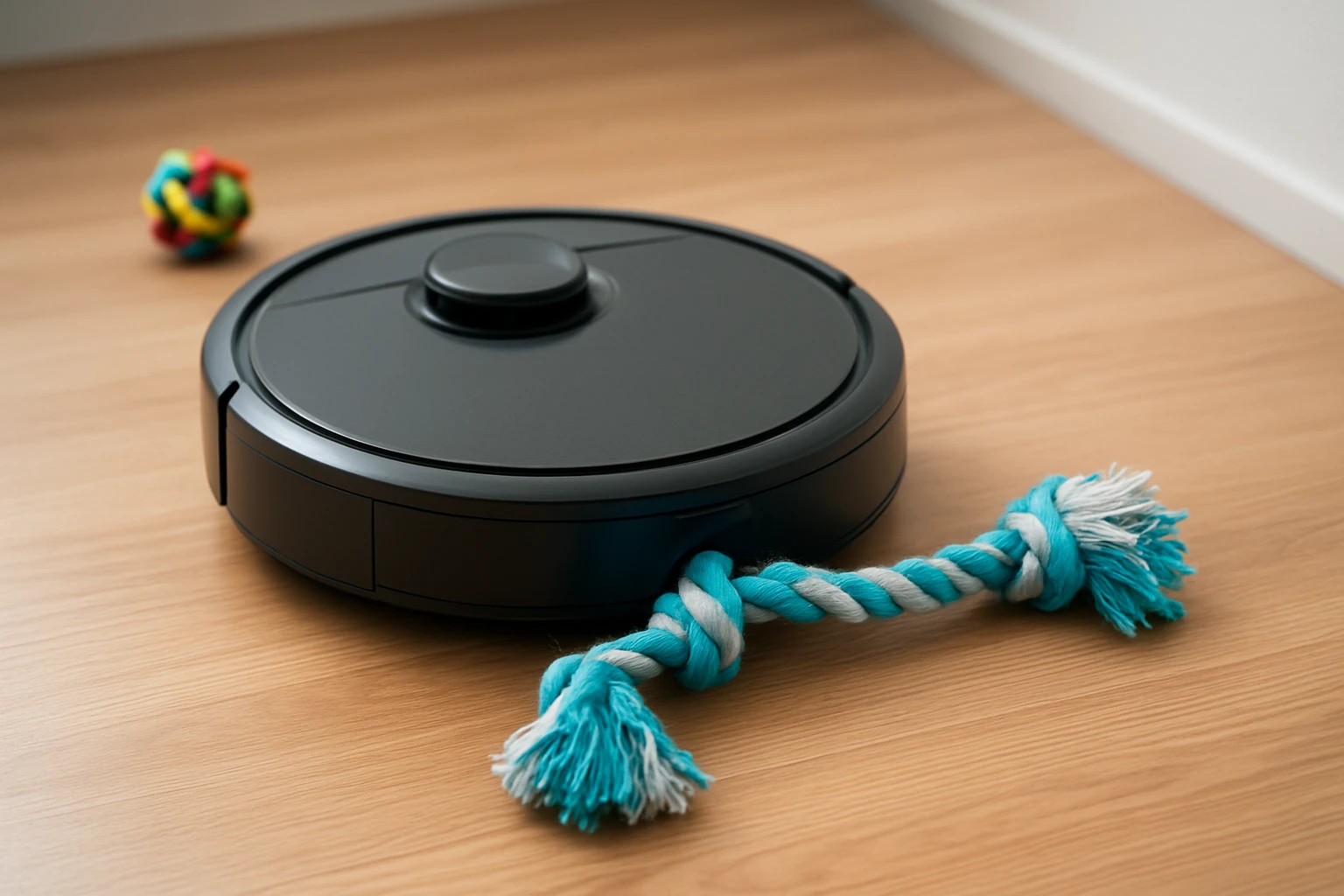
How to Stop Your Robot Vacuum from Getting Stuck on Pet Toys: Troubleshooting, Quick Fixes & Prevention
Pet owners frequently discover that their autonomous cleaning assistants become immobilised by scattered toys. This guide explains how to identify the causes, apply immediate fixes, and implement long‑term prevention strategies. By following each step, one can maintain a tidy home while preserving the longevity of the robot vacuum.
What You'll Need
- A reliable robot vacuum such as the Shark AI Robot Vacuum XL.
- Magnetic boundary strips like the GIB Robot Vacuum Boundary Strips.
- A dusting bumper such as the The Bumpster Dusting Vacuum Bumper.
- If a combined vacuum‑and‑mop solution is desired, consider the UMMUND Robot Vacuum & Mop Combo.
- Basic cleaning tools: a microfiber cloth, a small handheld brush, and optional adhesive tape for securing strips.
Step 1: Map the Environment and Identify High‑Risk Zones
The first action is to allow the robot vacuum to perform a full‑house scan. Modern units equipped with LiDAR or matrix navigation create precise maps that highlight obstacles. The Shark AI Robot Vacuum XL employs 360° LiDAR vision and precision home mapping, enabling it to recognise and avoid objects in real time. Its powerful suction (rated 4/5.0 from 4,109 reviews) and self‑emptying base reduce the need for manual intervention, allowing the user to focus on map analysis.
During the scan, observe where the vacuum repeatedly stops or changes direction. These points often correspond to clusters of pet toys, cords, or low‑lying furniture. Document the locations on a printed floor plan or within the companion app. Understanding the pattern helps in applying targeted fixes rather than generic cleaning.
Step 2: Create Physical Barriers Using Magnetic Boundary Strips
Once high‑risk zones are identified, install magnetic boundary strips to delineate no‑go areas. The GIB Robot Vacuum Boundary Strips are compatible with many Shark, Neato, and RoboVac models. Each strip contains a magnetic tape that adheres to the floor and creates an invisible wall recognized by vacuums lacking advanced vision. The product costs $15.99, carries a 4.1/5.0 rating from 1,429 reviews, and provides 13 feet of strip that can be cut to size.
To install, clean the floor surface, peel the backing, and press the strip firmly. Position the strip a few inches away from the toys to give the robot a buffer zone. Because the strips are magnetic, they can be repositioned as the toy layout changes. This method prevents the vacuum from attempting to cross into cluttered areas, thereby reducing the frequency of stuck incidents.
Step 3: Equip the Vacuum with a Dusting Bumper for Gentle Contact
Even with barriers, occasional contact with toys is inevitable. A dusting bumper cushions the impact and simultaneously cleans baseboards. The The Bumpster Dusting Vacuum Bumper attaches to the front of most upright and canister vacuums, including robot models that allow accessory mounting. Priced at $9.95 and rated 4/5.0 from 22 reviews, it offers a plush surface that protects furniture while dusting edges.
Installation involves affixing three sticky‑backed hook fasteners to the vacuum chassis and sliding the bumper onto them. Height adjustment allows the user to align the bumper with baseboards of varying thickness. When the robot encounters a toy, the bumper slides over it rather than becoming entangled, and the plush material picks up stray dust that would otherwise accumulate on the toy.
Step 4: Optimize Cleaning Schedules and Modes
Modern robot vacuums provide multiple cleaning modes that can be tailored to homes with pets. The Shark AI Robot Vacuum XL offers auto, spot, and edge cleaning. For households where toys are frequently moved, schedule cleaning during periods when the floor is clear, such as early morning or late evening. Use the app to set a “quiet” mode that reduces suction power near delicate toys, preventing them from being pulled into the brush roll.
If a combined vacuum‑and‑mop solution is preferred, the UMMUND Robot Vacuum & Mop Combo offers separate water and dust tanks, allowing simultaneous vacuuming and mopping. Priced at $109.99 with a perfect 5/5.0 rating from 31 reviews, it provides 180‑minute runtime and smart infrared sensors that detect obstacles. While it does not feature LiDAR mapping, its multiple cleaning modes (auto, zigzag, spot, edge) and voice control compatibility make it a versatile backup for homes where the primary robot is temporarily unavailable.
Tips & Pro Tips
- Regular Toy Management: Store toys in bins or baskets when not in use. This simple habit reduces the number of obstacles the robot must navigate.
- Use Low‑Profile Mats: Place thin rubber mats under heavy toys. The robot can glide over the mat without becoming trapped.
- Adjust Brush Roll Speed: Many robots allow brush roll speed adjustment. Lower speeds reduce the likelihood of pulling lightweight toys into the suction path.
- Maintain Sensor Cleanliness: Dust on infrared or LiDAR sensors can impair obstacle detection. Wipe sensors weekly with a microfiber cloth.
- Leverage Voice Assistants: Both the Shark and UMMUND models integrate with Alexa, Google Assistant, and Siri. Use voice commands to pause cleaning when a toy is placed on the floor.
Troubleshooting Common Issues
| Problem | Possible Cause | Solution |
|---|---|---|
| Robot stops mid‑room | Brush roll entangled in soft toy | Remove the toy, clean the brush roll, and re‑attach the Bumpster Bumper for added protection. |
| Boundary strips not recognised | Incompatible robot model | Verify compatibility using the product description of the GIB Strips. Consider upgrading to a robot with LiDAR navigation. |
| Battery depletes quickly | Frequent high‑power suction | Switch to a lower suction setting during toy‑heavy sessions, or schedule shorter cleaning intervals. |
Conclusion
By mapping the home, installing magnetic boundary strips, equipping the robot with a dusting bumper, and fine‑tuning cleaning schedules, one can dramatically reduce the incidence of robot vacuums becoming stuck on pet toys. The recommended products—Shark AI Robot Vacuum XL, GIB Robot Vacuum Boundary Strips, The Bumpster Dusting Vacuum Bumper, and UMMUND Robot Vacuum & Mop Combo—offer complementary features that address detection, prevention, and gentle contact. Implementing these steps will result in a cleaner environment, extended device lifespan, and more time for the owner to enjoy with their pets.
Products Mentioned in This Guide
Frequently Asked Questions
Why does my robot vacuum get stuck on pet toys?
The vacuum’s sensors can’t detect small, low‑profile items, causing the wheels to snag or the brush roll to catch.
How can magnetic boundary strips prevent a vacuum from hitting toys?
Magnetic strips create an invisible wall that the vacuum’s magnetic sensors recognize, steering it away from designated toy zones.
What is a dusting bumper and how does it help?
A dusting bumper attaches to the vacuum’s front, lifting small objects like toys so they roll away instead of trapping the robot.
Are there quick fixes when the vacuum is already stuck?
Turn the robot off, gently lift the wheels, and remove the toy or use a thin tool to free the brush roll before restarting.
Can a vacuum‑and‑mop combo handle pet toys better than a standard robot?
Combo models often have stronger suction and larger brush rolls, which can push toys aside, but they still benefit from boundary strips or bumpers for optimal performance.